
What Happens When Bad Fuel Hits a Toyota Hilux?
A Real Workshop Case Study from Combined Automotive Services
Even the toughest vehicles can run into problems when the wrong fuel finds its way into the tank...
The Problem
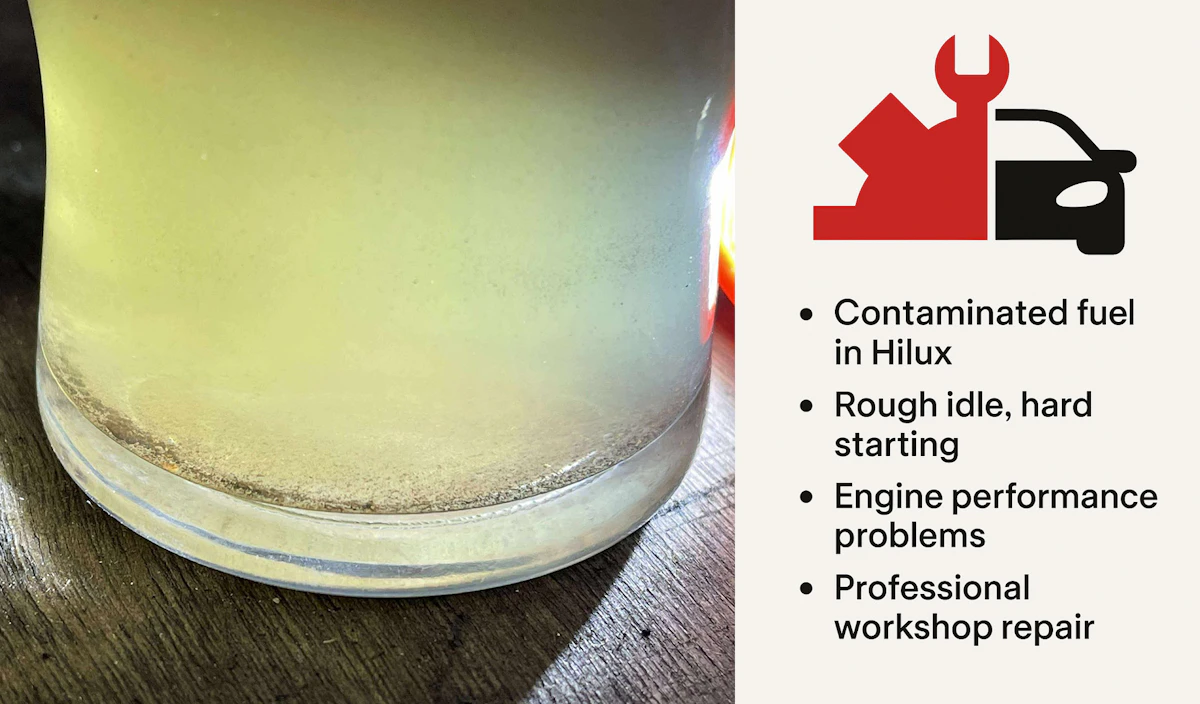
Recently at Combined Automotive Services in Milton, our team dealt with a Toyota Hilux that arrived with a classic but frustrating issue — contaminated fuel. While the Hilux has a reputation for reliability and toughness, poor quality or contaminated petrol can cause a range of performance problems that need professional attention.
This particular repair is a good example of how experienced technicians approach fuel-related issues step by step to restore reliability without risking further damage to the engine.
When a Tough Hilux Starts Acting Up
What will kill a Hilux petrol? Well… apparently not even terrible fuel!
This tough Hilux spent a couple of months relaxing at the airport while its owner was overseas. When she returned? Rough idle, hard starting, and a very unhappy engine. The vehicle had been sitting unused for an extended period, and shortly after it was started again, it became clear that something was not right. The engine struggled to start properly and once running it idled unevenly and lacked the smooth performance the owner was used to.
Recognising that something serious might be going on, the owner had the vehicle towed straight to Combined Automotive Services in Milton for professional diagnosis.
Step 1: Initial Inspection and Diagnostics
When a vehicle arrives with symptoms such as rough running or starting difficulties, the first step is always a thorough inspection.
At Combined Automotive Services, our technicians begin by gathering information from the customer and reviewing the symptoms being experienced. In this case the signs included:
- Rough idle
- Hard starting
- Poor engine performance
Using professional diagnostic equipment, our technicians then checked the vehicle’s systems to rule out common faults such as ignition issues, sensor problems, or fuel delivery faults. A quick round of diagnostics and—boom—diagnosis confirmed: contaminated fuel. Yep… the Hilux was basically trying to run on iced coffee instead of 91.
While bad fuel might sound simple, it can cause significant issues inside a modern fuel system if not dealt with correctly.

Step 2: Identifying the Source of the Problem
Fuel contamination can happen in several ways. Sometimes it’s caused by water entering the fuel tank, sometimes by degraded fuel after long periods of storage, or occasionally by contaminated fuel from a service station.
Because this Hilux had been sitting unused for a few months, the most likely cause was degraded or contaminated fuel sitting in the tank. Before any repair work is carried out, our technicians carefully confirm the condition of the fuel and assess the potential impact on the vehicle’s fuel system components.
Modern engines rely on very precise fuel delivery, and even small contaminants can affect how the engine runs.
Step 3: Removing the Contaminated Fuel
Once the problem was confirmed, the next step was to remove the contaminated fuel safely. This process must be carried out by trained professionals because modern fuel systems operate under pressure and require the correct procedures and equipment to avoid damage or safety risks.
The bad fuel was completely flushed out of the system to prevent further contamination of the fuel lines, injectors, and pump.
Removing contaminated fuel is one of the most critical stages of the repair because leaving even a small amount behind can cause the problem to return.
Step 4: Replacing Key Fuel System Components
With the contaminated fuel removed, the next step involved replacing the fuel filter. Fuel filters play a vital role in protecting the engine by trapping contaminants before they reach sensitive components such as fuel injectors. Once contaminated fuel passes through the system, replacing the filter helps ensure that any remaining debris does not continue circulating.
Installing a new filter helps restore proper fuel flow and protects the engine moving forward.
Step 5: Cleaning and Protecting the Fuel System
After the system was flushed and the filter replaced, the team at Combined Automotive Services added a fresh tank of clean fuel. To complete the process, a professional BG fuel system treatment was used to clean internal fuel system components and provide additional protection.
These treatments are designed to help remove deposits and residue that may remain after contamination, ensuring that injectors and other components continue to operate efficiently.
Step 6: Final Testing and Performance Checks
Once the fuel system had been cleaned and refilled, the Hilux underwent final checks and testing. The technicians ran the engine, monitored performance, and ensured that the previous symptoms had been resolved. This testing stage confirms that the repair has been successful and that the engine is operating as it should.
The results? Smooth running, easy starting, and one Hilux back in business.
The Importance of Professional Diagnosis
Fuel contamination can sometimes appear similar to other mechanical issues, which is why professional diagnostics are so important. Without proper testing and inspection, it is easy to misdiagnose symptoms like rough running or hard starting, potentially leading to unnecessary repairs.
At Combined Automotive Services in Milton, our experienced technicians use the correct diagnostic tools and proven workshop processes to accurately identify problems and carry out the necessary repairs.
Back on the Road
Turns out, even bad fuel can’t keep a good Hilux down—as long as you bring it to the right workshop. After the repair process was completed, this Toyota Hilux was back to starting easily, running smoothly, and performing exactly as it should.
Combined Automotive Services — keeping Brisbane’s toughest cars even tougher.